
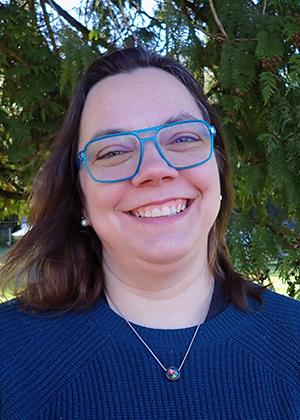
For Katherine Bournelis, rehabilitation medicine is grounded in a simple but powerful idea: helping people live the lives they want on their own terms. A second-year PhD student in Rehabilitation Science at the University of Washington, Bournelis is drawn to a field that looks beyond diagnoses to understand the whole person, including their goals, strengths, priorities and the environments they navigate.
“What excites me most is that rehabilitation medicine focuses on improving quality of life and honoring people’s choices. The field integrates clinical practice, assistive technology, interdisciplinary teamwork and evidence‑based problem‑solving in ways that are practical and creative,” she said.
Now completing her second year of doctoral training, Bournelis says the experience has challenged her to examine long-standing questions in disability services through a rigorous research lens. She especially values the program’s interdisciplinary structure, which brings together trainees from a wide range of backgrounds.
"Learning alongside colleagues from different professional and research backgrounds has broadened my perspective and strengthened my critical thinking. The diversity of experiences within my cohort has pushed me to think more intentionally about how research can translate into meaningful change in practice and policy,” she notes.
Much of Bournelis’ research connects directly to her professional work as director of the UW Employment Program (UWEP), where she supports adults with intellectual and developmental disabilities (IDD) in building self-directed lives. The overlap between practice and scholarship is intentional.
“One of the things I value most about being both a practitioner and a researcher is that the questions arising in the field directly shape the projects I pursue in my PhD program, and the research, in turn, gives me new tools to bring back to our clients, families and staff. It feels like a nice reciprocal cycle,” she said.
Her current projects include a partnership with the Washington Assistive Technology Act Program (WATAP) and WOOF3D to develop low-cost 3D-printed bracelets that support communication and self-advocacy. She is also developing an eight-week telehealth mindfulness program designed to reduce anxiety and build emotional regulation skills for adults with IDD, as well as a transition-age youth initiative that pairs workshops with paid community internships.
Looking ahead, Bournelis hopes to continue working at the intersection of research, practice and disability justice, focusing on life-course frameworks that support autonomy, health and community participation throughout an individual’s life. Outside of her work, she recharges with quintessential Pacific Northwest activities such as hiking, cooking and exploring coffee shops and bookstores around the Puget Sound with her family.
Story by Marissa Lorberau, Communications Specialist, University of Washington School of Medicine MD Program/WWAMI.