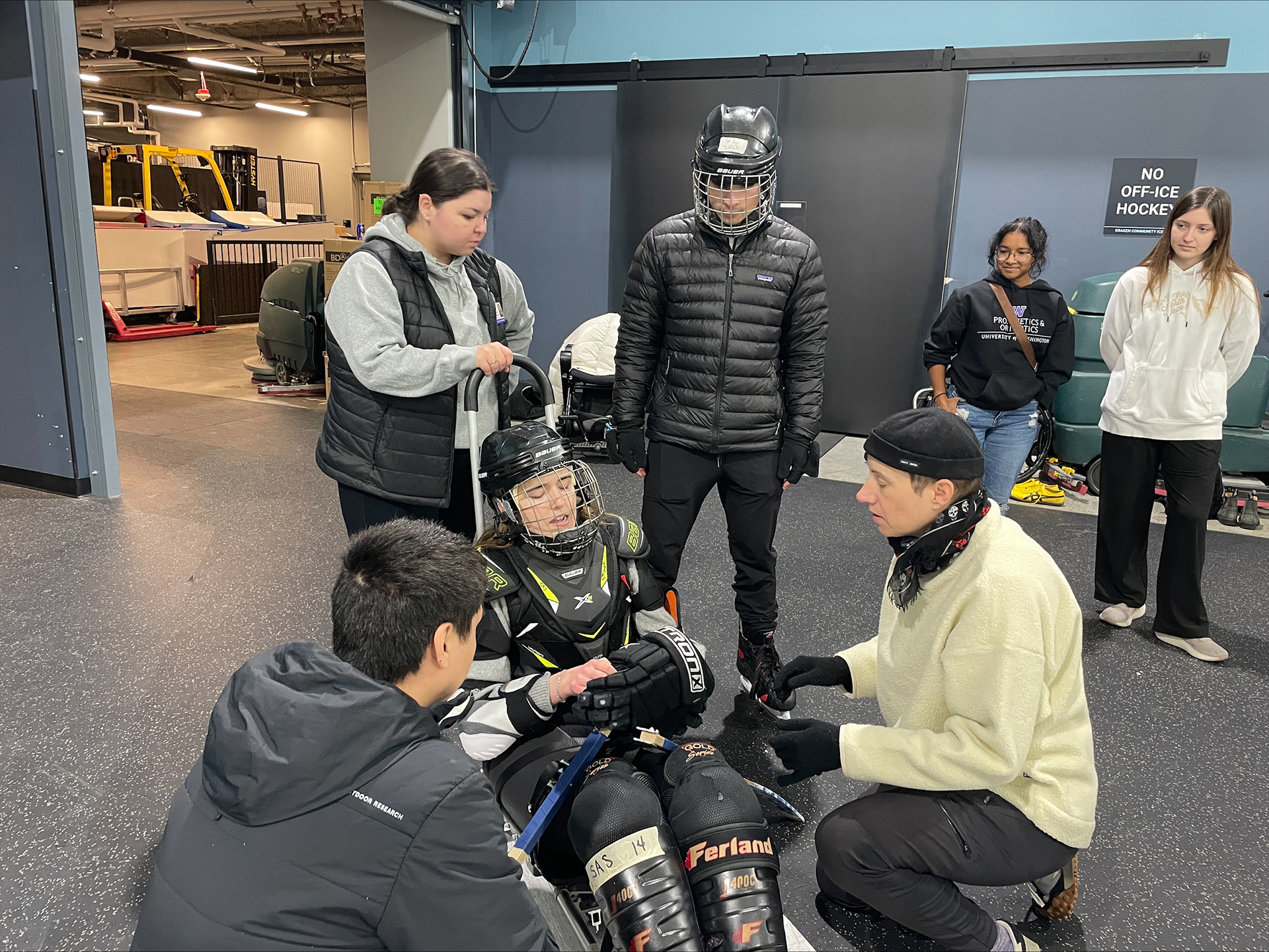

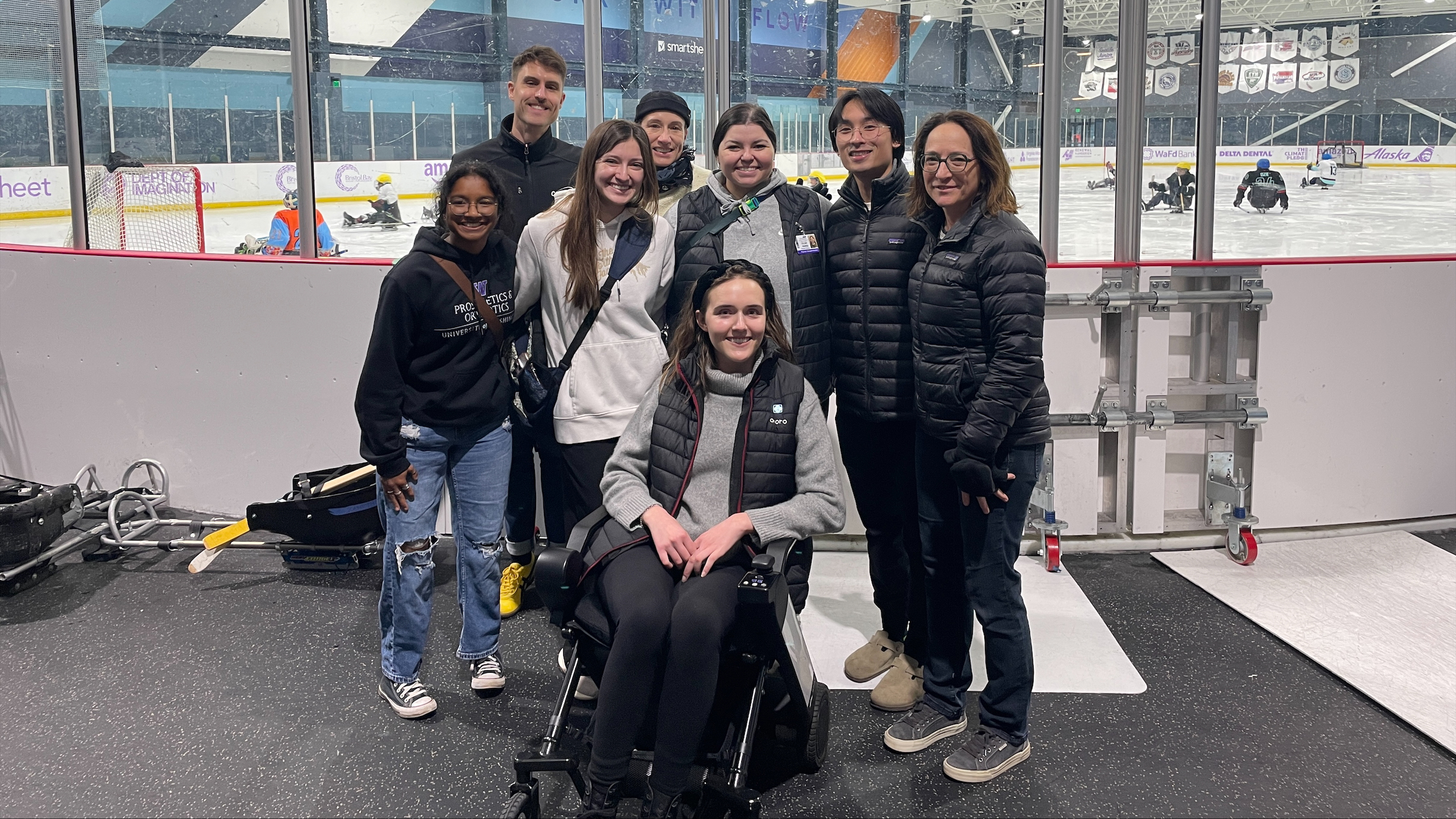
A new diagnosis that changes physical function, such as spinal cord injury, stroke, or limb loss, can make sports and recreational activities feel out of reach. People who grow up with conditions that affect their mobility may feel the same way. But at the Kraken Community Iceplex, volunteers and athletes for Seattle Adaptive Sports (SAS), along with volunteers from the Department of Rehabilitation Medicine at the UW School of Medicine, show how adaptive equipment and support can open the door to new ways to play.
Professor Jelena Svircev, MD, leads this charge. As the director of a spinal cord injury fellowship and SAS board member, she provides on-site training and interdisciplinary knowledge to volunteers and medical staff. Her mission is to encourage athletes of all skill levels to play any sport by adapting it to fit their physical abilities.
“People are not aware of the number of sports that are available to individuals with a spectrum of disabilities, from visual impairments, brain injuries, amputations, or spinal cord injuries with arm and leg weakness. If there is a sport, it has been adapted. Providing folks with the information and providing them with opportunities where they can see how these sports are being played is invaluable,” adds Dr. Svircev.
Jess Thomson, vice president of the SAS board of directors, serves as the team manager for the youth sled hockey team. Her 16-year-old son, Graham Thomson, both plays for and coaches the team in this adaptive version of ice hockey, where players sit on double-bladed sleds and use two sticks to propel themselves and hit the puck. Thomson, whose son Graham has cerebral palsy, remembers the isolating experience of receiving a diagnosis without a roadmap.
"When my son Graham was diagnosed at 20 months, we got a book, a container of apple juice, and a 'good luck,'" Thomson recalled. "Having providers come out of training with the knowledge that every family will need different guidance is critical," adds Thomson.
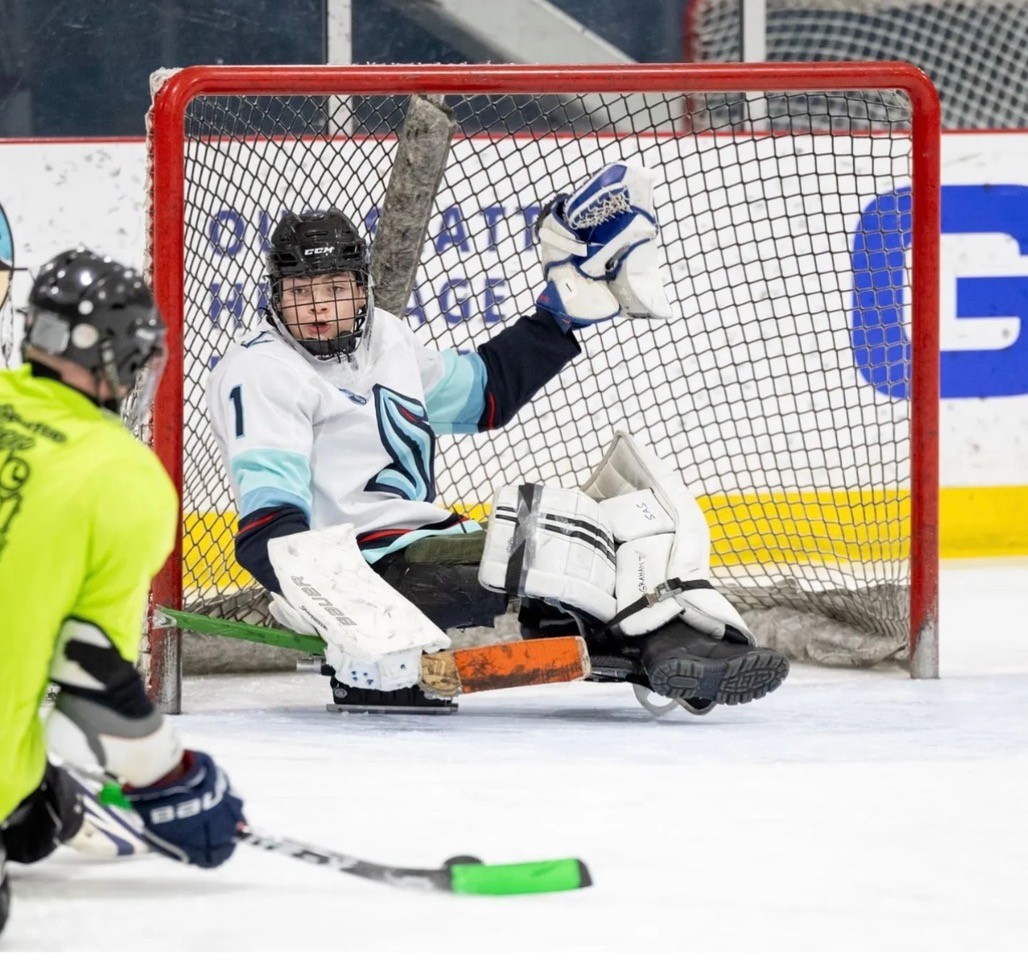
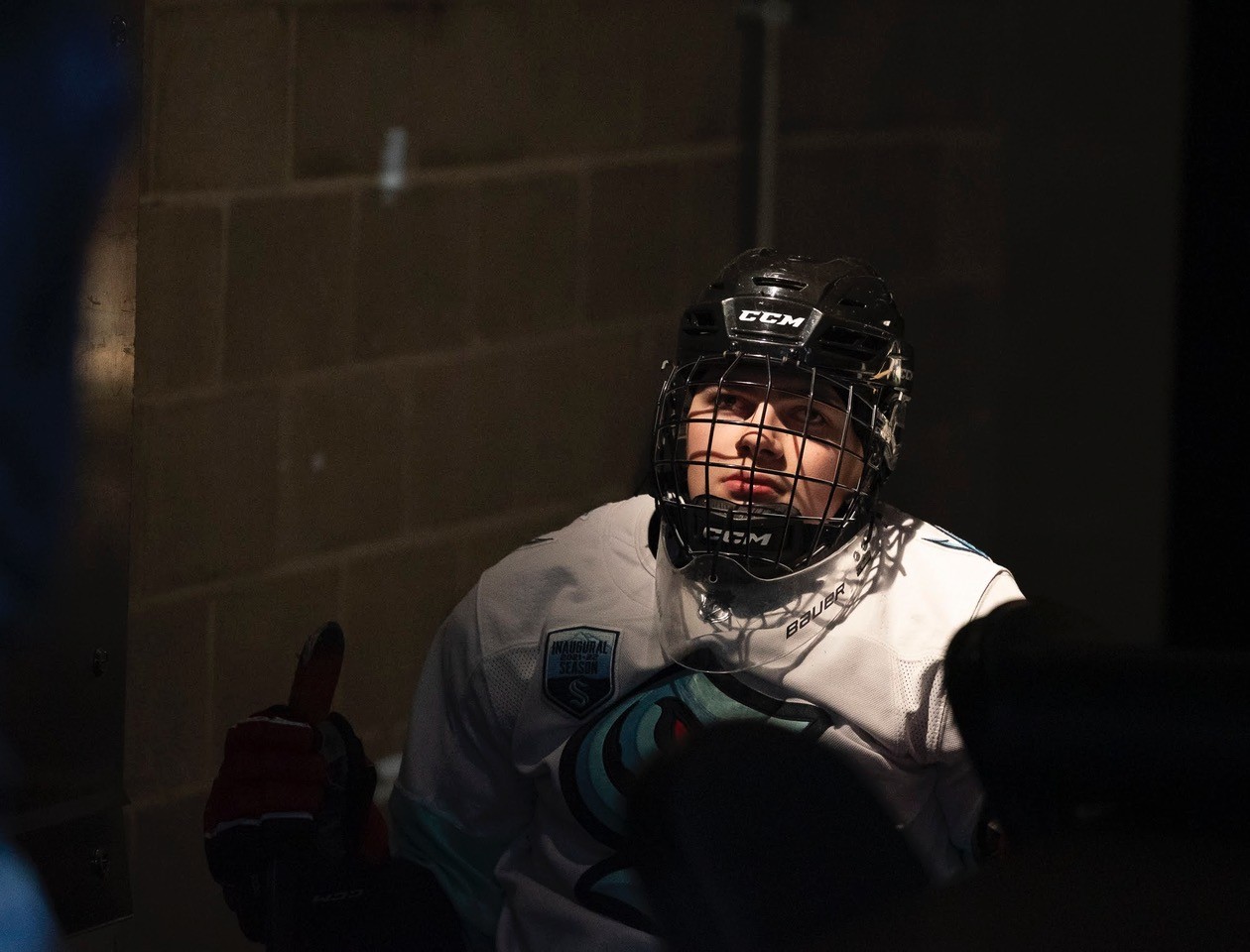
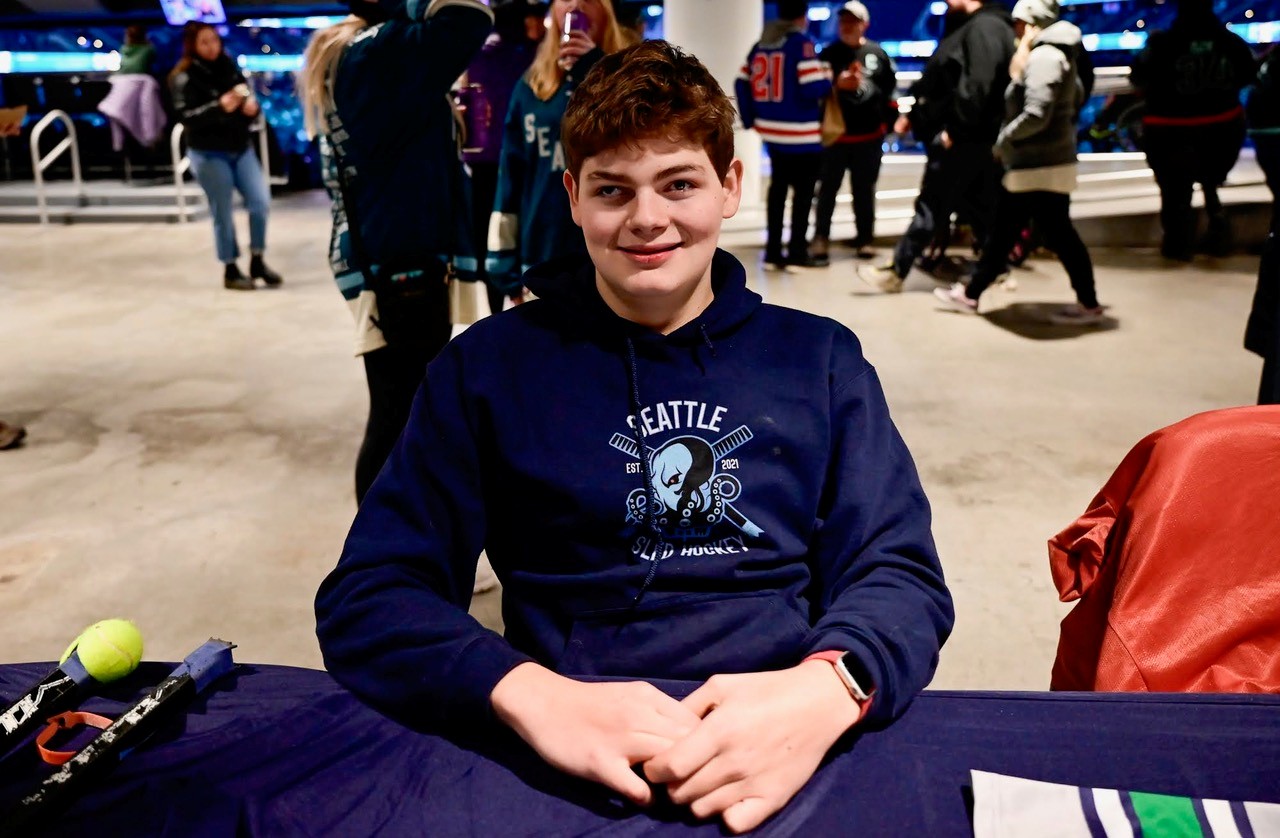
In the photos above, Graham Thompson shows his love for sled hockey. Image 1: Graham waits in goal, preparing to stop the puck. Image 2: Graham in his goalie mask. Image 3: Graham represents his team in a Seatle Sled Hockey shirt.
Emily Boeschoten, an occupational therapy (OT) student, athlete, and volunteer in the adaptive sports community, knows this transition intimately. Boeschoten has a progressive neurodegenerative condition that affects all four limbs, resulting in spastic tetraparesis with rigidity. Having navigated life with a disability for over 13 years, she is now a vocal advocate for the wide array of possibilities for movement. Boeschoten works to ensure new athletes and their families understand that a change in ability is not a change in potential.
"What I wish someone had told me 13 years ago is that life moving forward is going to be different, but that does not mean it is going to be worse," says Boeschoten. "Adaptive sports really embody that idea. Just because you have a disability does not mean you are unable to do the things you enjoy," she adds.
“I want to empower my patients to take part in their desired occupations by exploring a wide range of solutions to the obstacles they face. On a systemic level, I hope to decrease the barriers for people with physical disabilities wanting to join the OT profession and the healthcare workforce as a whole,” says Boeschoten about the impact she hopes to make in the field of OT.
While brainstorming ways to make adaptive sled hockey more inclusive, Dr. Svircev recognized the need for a full panel of volunteers across all medical specialties. By identifying volunteers from physical therapy (PT), occupational therapy (OT), and prosthetics & orthotics (P&O), she created a diverse blend of trainees across multiple disciplines.
“The medical trainees are not sitting back in the corner with their arms crossed, thinking that they're there to provide medical care, but rather they are going and getting equipment, helping with positioning of the athletes in the sleds, even sometimes being on the ice as pushers for the athletes that need pushing,” adds Dr. Svircev.
At the same time, Thomson asserts that at a typical youth practice, the atmosphere is one of radical inclusion. In this environment, having a disability isn't a hiccup or an awkward moment —it's the baseline.
"It is so normalized to have a disability at these sports events, like having a leg lying on a bench," Thomson said. "Everybody is so used to helping and being helped. There is not a side-steppy, uncomfortable way of helping each other that often exists between a disabled person and the rest of their community,” adds Thomson.
Dr. Svircev believes this hands-on interaction is critical for future clinicians to understand the physical realities their patients face.
“Observing how athletes interface with their equipment will provide a clear idea of how they move and navigate on the ice. This hands-on knowledge will allow clinicians to deeply understand how specific disabilities influence an athlete’s ability to engage in the sport,” says Dr. Svircev.
Dr. Svircev adds that watching how an athlete maneuvers a sled can help doctors or physical therapists tailor a treatment plan if that athlete comes into the clinic with shoulder or wrist pain.
“This equipment can be unforgiving on the skin and can, in some cases, cause skin injuries. Our role as providers is to look at that piece of equipment, identify where pressure points are, and find ways that we can reduce the risk,” says Dr. Svircev.
Thomson notes that while these children have spent years in hospitals and undergone umpteen surgeries, the challenge of the ice rink or a basketball court offers the opportunity to develop a different kind of strength. It's a sentiment echoed by her son.
“My son’s famous phrase at age 16 is: ‘My number one regret in life is that I didn't start adaptive sports sooner,’” Thomson shared. “He sees that the kind of challenge one can meet and embrace on a basketball court is very different from the other challenges you see in this life."
Boeschoten’s own athletic life is a testament to the vast spectrum of opportunities available in the Pacific Northwest. While she volunteers with sled hockey and wheelchair basketball, her personal pursuits take her from the peaks to the greens. Her experience includes sit-skiing, rock climbing, mountain biking, and adaptive golf, proving that precision and technique are accessible to all.
“I want to empower my patients to take part in their desired occupations by exploring a wide range of solutions to the obstacles they face. On a systemic level, I hope to decrease the barriers for people with physical disabilities wanting to join the OT profession and the healthcare workforce as a whole,” says Boeschoten about the impact she hopes to make in the field of OT.
The focus is no longer on what the body cannot do, but on the creative ways it can move, compete, and thrive. As Boeschoten puts it, if sports and activity are what you love, the community will find a way to keep you in the game. It’s not about returning to the way things were; it’s about discovering how great they can still be.