
A new endowed faculty fellowship at the University of Washington School of Medicine will support the next generation of multiple sclerosis (MS) researchers and clinicians while honoring the legacy of one of the field's most influential leaders.
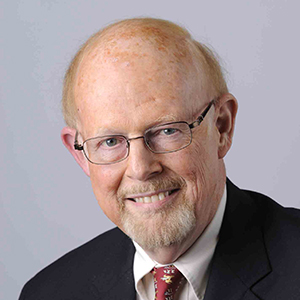
The Kraft family has established the George H. Kraft M.D., M.S., Endowed Faculty Fellowship for Multiple Sclerosis Education, Research, and Clinical Care. The fellowship will enhance the University of Washington's ability to recruit, retain, and support faculty advancing MS research, treatment, and education, with a preference for supporting early-career faculty.
The inaugural fellowship recipient is Sarah Simmons, MD, PhD, assistant professor in the Department of Rehabilitation Medicine at the UW School of Medicine. Dr. Simmons is a physician-scientist whose clinical and research work focuses on improving the lives of people living with MS through rehabilitation and exercise-based interventions.
For Dr. Simmons, the fellowship carries special significance. As an early-career faculty member working in MS research and care, she also had the opportunity to know and learn from Dr. Kraft, whose influence continues to shape the field today.
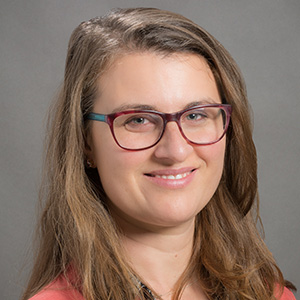
"This fellowship is especially meaningful because of Dr. Kraft's impact on the field and on the many people he mentored," said Dr. Simmons. "He was a visionary and recognized early on what an impact rehabilitation could have for people with MS. That vision is echoed throughout his clinical research, which was always so patient-focused, and in the way the UW MS Center, which he founded, is run. He brought so much to our field, and it’s truly an honor to receive this inaugural fellowship in his name.”
Honoring a pioneer in MS care
The fellowship was created by the Kraft family in memory of George H. Kraft, MD, MS, who passed away in 2022 after a career that transformed MS care, research, and education.
Dr. Kraft joined the University of Washington faculty in 1969 and remained an integral member of Rehabilitation Medicine for more than five decades. He served as the inaugural Nancy and Buster Alvord Professor of Multiple Sclerosis Research and helped establish the University of Washington as a national leader in MS rehabilitation and patient-centered research.
Dr. Kraft's influence extended far beyond the University of Washington. A nationally recognized leader in rehabilitation medicine and multiple sclerosis care, he received a Lifetime Achievement Award from the National Multiple Sclerosis Society and held some of the highest leadership positions in his field, including serving as president of the American Academy of Physical Medicine & Rehabilitation, the Association of Academic Physiatrists, and the American Association of Neuromuscular and Electrodiagnostic Medicine.
In the late 1970’s, a time when few dedicated MS centers existed in the United States, Dr. Kraft helped develop one of the nation's first multidisciplinary MS programs through a partnership between UW rehabilitation medicine and neurology. His vision that effective MS care should integrate medical, rehabilitation, and mental health services helped shape models of care that are now widely used across the country. Today, the National Multiple Sclerosis Society only certifies comprehensive centers that combine rehabilitation, neurology, and mental health care according to the model first developed by Dr. Kraft.
Dr. Kraft also made seminal contributions to MS research. Among his many achievements, Dr. Kraft was the first to illustrate empirically that fatigue was the most common and, for many, one of the most disabling symptoms of MS. Today, fatigue is accepted as a core clinical measure for MS. He was also one of the first to recognize and write about the way the many symptoms of MS synergistically impact patients.
Throughout his career, Dr. Kraft was motivated by care and concern for his patients, and he created a model of patient-centered MS research. In addition to his empathy for patients, he was also deeply committed to mentoring trainees and junior faculty. Many of his mentees are now leaders in MS research themselves.
"George Kraft transformed the field of multiple sclerosis care through his commitment to innovation, collaboration, and, above all, improving the lives of people living with MS," said Janna Friedly, MD, MPH professor and chair of the Department of Rehabilitation Medicine at the UW School of Medicine. "He believed deeply in supporting the next generation of physiatric researchers and clinicians. This fellowship honors that legacy by investing in emerging leaders whose work will advance discovery, improve care, and help more people with MS thrive."
Supporting the next generation
The fellowship reflects Dr. Kraft's longstanding commitment to mentorship and faculty development. By supporting emerging faculty members, the endowment will help accelerate research discoveries and strengthen care for people living with MS.
For Dr. Simmons, the fellowship will provide meaningful support as she continues research focused on understanding how exercise and rehabilitation interventions can improve outcomes and quality of life for people with MS.
"It’s an exciting time for MS rehabilitation research. Growing studies suggesting that exercise and rehabilitation strategies can not only improve symptoms, but may also promote neuroplasticity and remyelination in people living with MS, which is greatly needed. We have just completed the first pilot clinical trial on transcutaneous spinal cord stimulation combined with therapy for recovery of hand/arm function in MS. Based on very encouraging results, we are pursuing larger, confirmatory and mechanistic studies, and expanding to investigate other symptomatic and functional benefits of this technology. I have also recently opened a second line of research exploring the role of physical activity and other rehabilitative strategies in promoting remyelination in people with MS. I’m so grateful for the extra support this fellowship will provide for these lines of research.
The department views the fellowship as both a tribute to Dr. Kraft's life and a forward-looking investment in the future of MS research and care.
"The most meaningful tributes are those that create opportunities for others," Dr. Friedly said. "This fellowship honors Dr. Kraft's remarkable contributions while providing support for faculty whose work will shape the future of multiple sclerosis care and research."
The George H. Kraft M.D., M.S., Endowed Faculty Fellowship for Multiple Sclerosis Education, Research, and Clinical Care was established through a generous gift from the Kraft Family: John and Betsy Kraft, Mary Kraft, and Susannah and Cliff Butscher.