
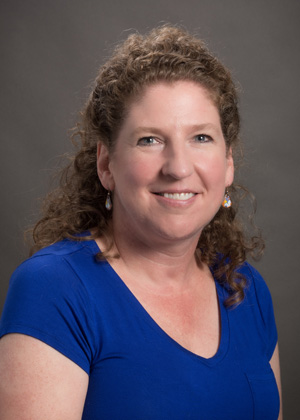
A new multi-institution research project will explore how social and psychological factors shape mobility after spinal cord injury, with a key roles for Professor Jeanne Hoffman, PhD, and Associate Professor Heather Feldner, PT, MPT, PhD, both in rehabilitation medicine at the University of Washington School of Medicine.
Dr. Hoffman and Dr. Feldner are co-investigators on the study, led by Lynn Worobey, PhD from the University of Pittsburgh. The project, Mobility and the impact of psychosocial factors following spinal cord injury, received a two-year investigational grant of $299,917 from the Craig H. Neilsen Foundation.
The research brings together clinicians, scientists, and people with lived experience to better understand how individuals make daily mobility decisions, and how those decisions are shaped not only by physical ability, but also by factors such as pain, fatigue, environment, and social context.
Traditionally, mobility after spinal cord injury has been viewed as a hierarchy, with walking at the top and greater use of assistive devices seen as a sign of limitation. That approach centers physical capacity, which measures what someone can do under ideal conditions, rather than how they move through their actual daily lives.
This project challenges that model. Instead of ranking mobility, the research will focus on how people choose to move in different situations, whether that means walking, using a wheelchair, or shifting between both. These choices often reflect safety, energy, accessibility, and personal goals, not just physical ability. For example, someone who can walk short distances may decide to use a wheelchair while traveling, to maintain a reserve of energy for unexpected situations. By studying these real-world decisions, the team aims to better align rehabilitation care with what matters most to patients: independence, participation, and quality of life.
A core principle of the project is the disability rights mantra, “Nothing About Us Without Us,” which means people affected by research should help shape it. In practice, that includes involving individuals with spinal cord injury as partners in study design, data collection, and interpretation. This project includes a 10-member Consumer Advisory Board made up of people with spinal cord injury who represent a wide range of mobility experiences. Their input has already helped guide the study’s questions and methods, and they will continue to play an active role throughout the project.
Researchers will use focus groups, real-time mobile surveys, and a participatory approach known as photovoice, where participants document their experiences through images and narratives.
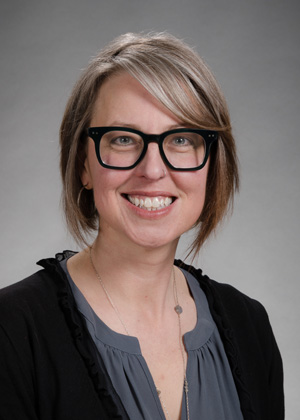
Dr. Hoffman has extensive experience in patient-centered outcomes research and stakeholder engagement. Her work will help ensure the study reflects real-world priorities and leads to practical, patient-centered solutions. Dr. Feldner has extensive experience in using novel approaches to get key data on mobility and will be leading the focus groups and photovoice data collection.
Findings from the study will support the development of new tools and approaches for rehabilitation care. The goal is to help clinicians and patients make more informed, personalized decisions about mobility over time. The project will also produce public-facing outputs, including a community-focused art installation that shares participant stories and experiences.
By integrating clinical research with lived experience, the team aims to improve how mobility is understood, measured, and supported after spinal cord injury.
To learn more about ongoing research into spinal cord injuries, visit the Northwest Regional Spinal Cord Injury System website.