

Just two quarters into the Master of Occupational Therapy program, Briseida Ayala already feels confident she has found the right path: “I am certain that this is the right career for me,” she said. “It has been intense, but exciting.”
As a first-year student, Ayala is building the scientific and clinical foundation that underpins occupational therapy. Central to that learning is the Occupational Therapy Practice Framework, which emphasizes the importance of “occupations”—the everyday activities that give meaning and structure to people’s lives.
Through her coursework, Ayala has also gained a deeper understanding of the human body, brain and nervous system, allowing her to connect biological structures with the functional movements people rely on daily.
One upcoming milestone she is particularly excited about is the detailed dissection of the arm next quarter, an experience she sees as an important step. “My goal is to specialize in hand therapy, and this experience will be a valuable tool in building the precision and skills I use to provide high-quality care,” she notes.
Beyond the classroom, Ayala is also participating in the Phyllis Gutierrez-Kenney Graduate Student Scholar cohort, a fellowship funded by the Latino Center for Health. The program brings together graduate students committed to advancing health equity and supporting the needs of Latino communities.
For Ayala, the fellowship reinforces the purpose behind her studies. “It keeps me grounded in the ‘why’ behind my work,” she said.
Through the program, she hopes to align her occupational therapy capstone or research projects with the real-time needs of Latinx/e communities in Washington state. By collaborating with community partners through the Latino Center for Health, Ayala hopes her academic work will serve as a meaningful resource rather than just a graduation requirement.
Her commitment to rehabilitation medicine is also deeply personal.
Ayala grew up in Prescott, Washington, a rural farming community where she lived on the orchard where both of her parents worked. At 13 years old, she began working alongside them. Each summer since, she has returned to the orchards and warehouses, gaining firsthand insight into the physical demands faced by agricultural workers.
That experience exposed her to the chronic pain and untreated musculoskeletal injuries that many workers quietly endure. “For agricultural workers, their occupation is their livelihood and that of their families. I saw my parents and community members suffer debilitating injuries but keep working because they had no other choice,” she reflects. “The idea of giving back to my community motivates and excites me to learn as much as I can to provide the care they deserve. I hope to replace that silent endurance with empowerment, education and sustainable health practices.”
Looking ahead, Ayala hopes to bring rehabilitative care directly to the communities that inspired her career. One goal is to develop site-based programs that bring ergonomic assessments and injury-prevention education directly to farms and warehouses.
She envisions culturally responsive health programs designed specifically for Spanish-speaking farmworkers—programs that address both language barriers and longstanding distrust of healthcare systems.
Ultimately, Ayala hopes to help create a future where workers no longer accept pain as an inevitable part of their labor. “My parents’ sacrifices allowed me to pursue this education,” she said. “I want to use it to ensure that the next generation of workers doesn’t just survive their work but thrives in their health.”


In photos:
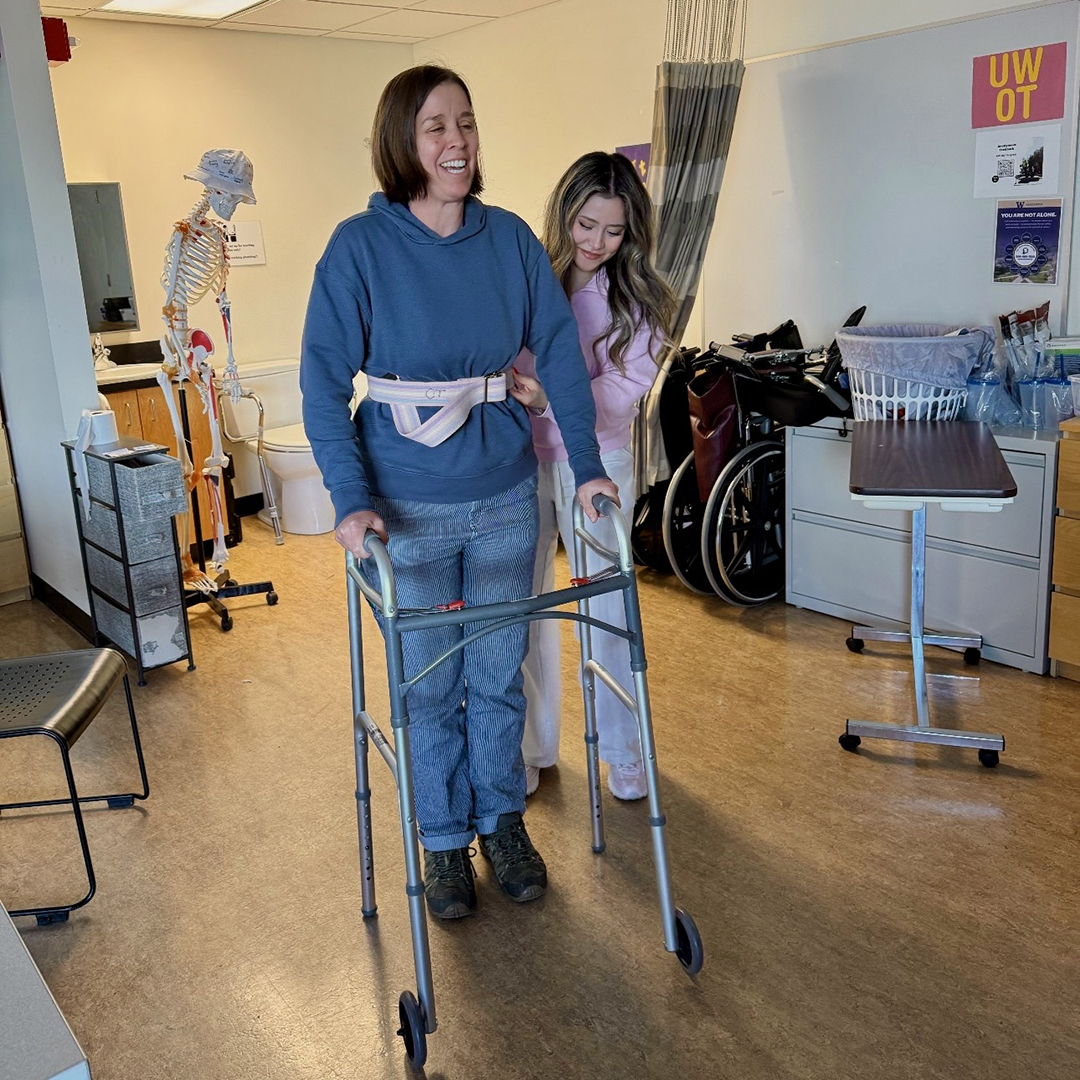
Ayala (on the right) practices assisting someone using a walker with another OT student.
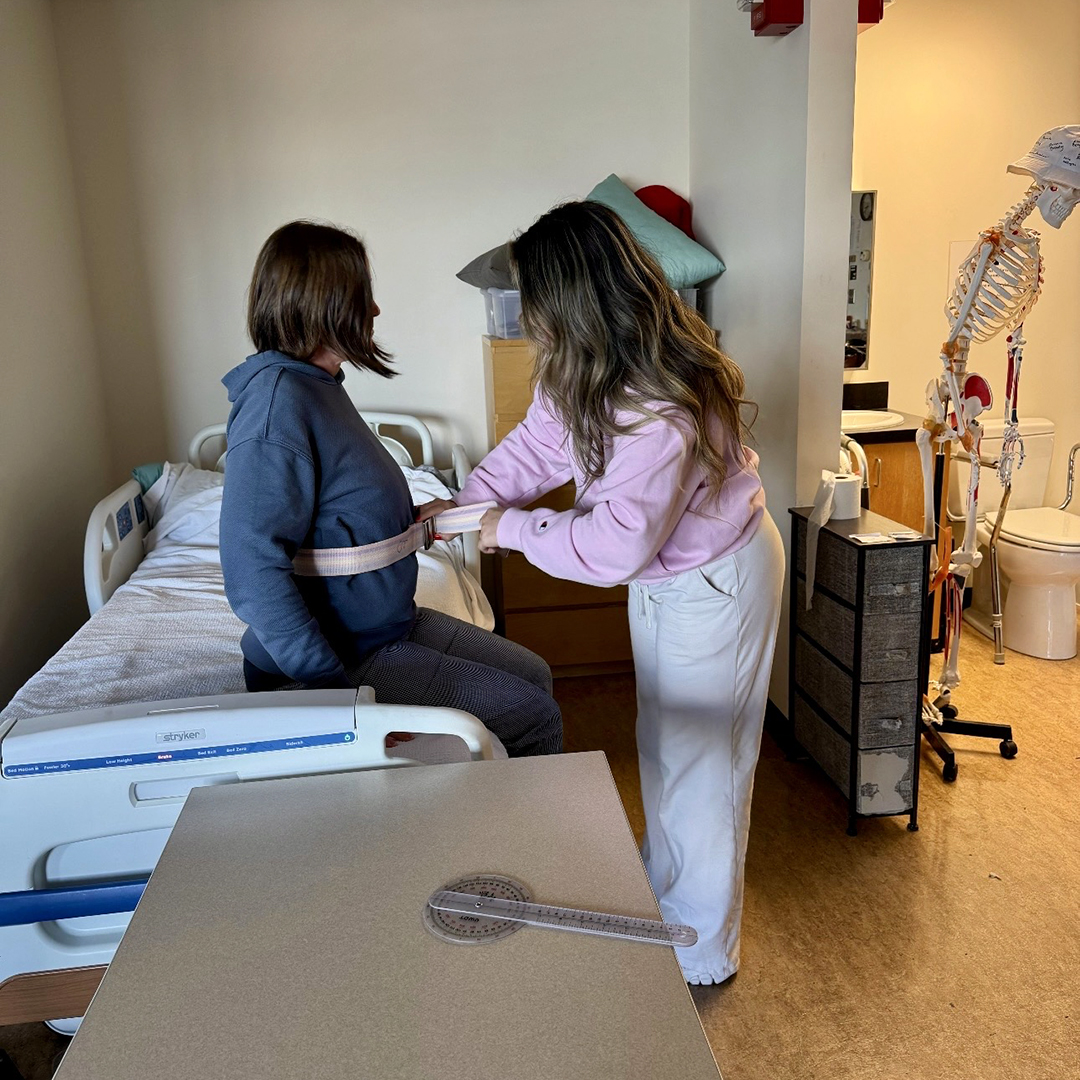
Ayala (on the right) practices using a gait belt to support a seated patient with a fellow OT student.
Ayala stands under a Seattle Mariners banner.
Ayala stands on the Seattle waterfront.
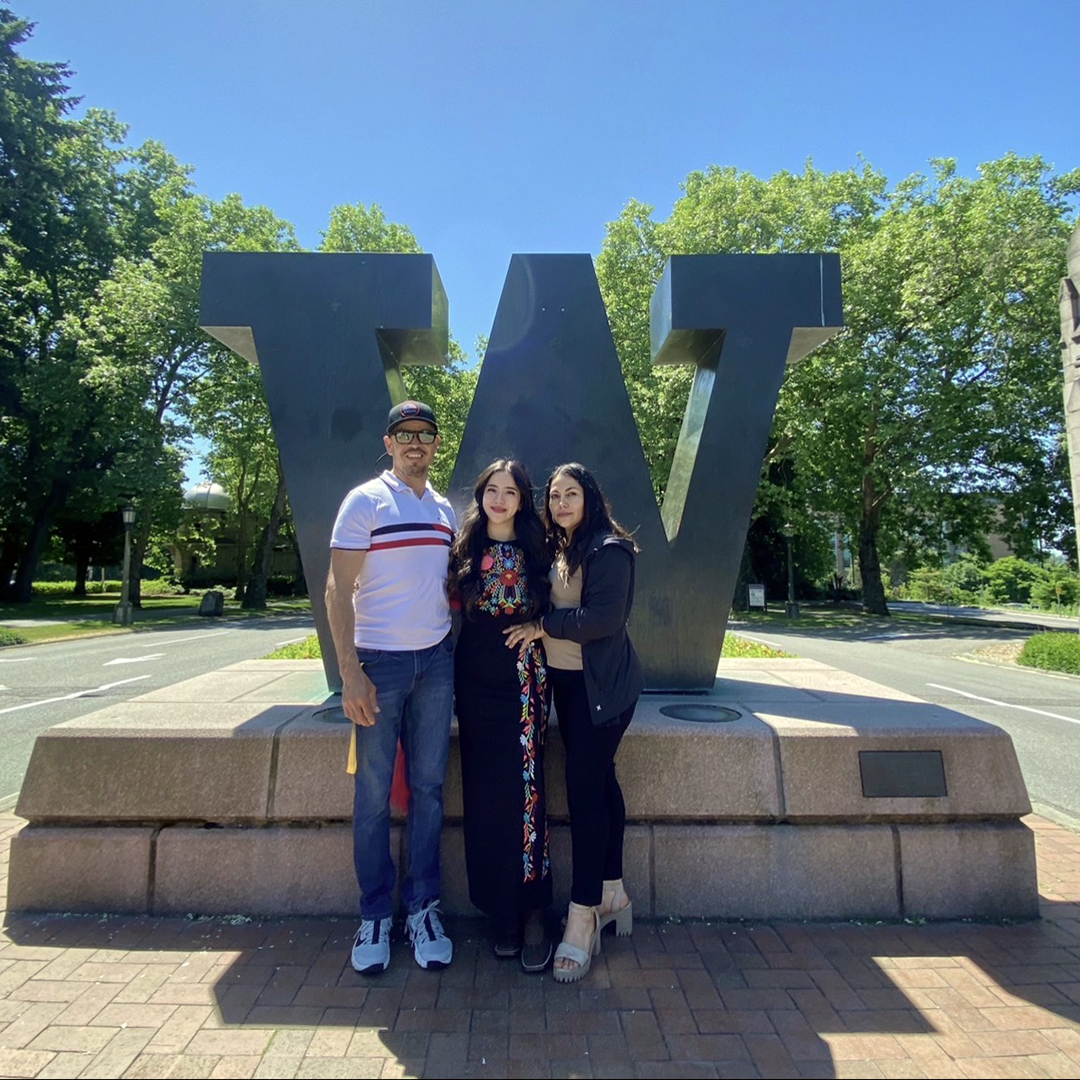
Ayala (center) with her parents on the University of Washington campus.