This year marks the 20th anniversary of the PhD Program in Rehabilitation Science. While the PhD program is the smallest of the Department’s academic programs, its impact is substantial. It prepares graduates to become researchers, educators, and leaders who contribute to the development of rehabilitation research, practice, and policy. From its origins to today, the PhD program has capitalized on several key ingredients: a shared vision of interdisciplinary research training, dedicated faculty leaders and mentors, and outstanding students and graduates. Currently led by Professor Tracy Jirikowic, PhD, OTR/L, FAOTA, and Professor Carolyn Baylor, PhD, CCC-SLP, the program is delighted to welcome its 11th cohort this autumn.
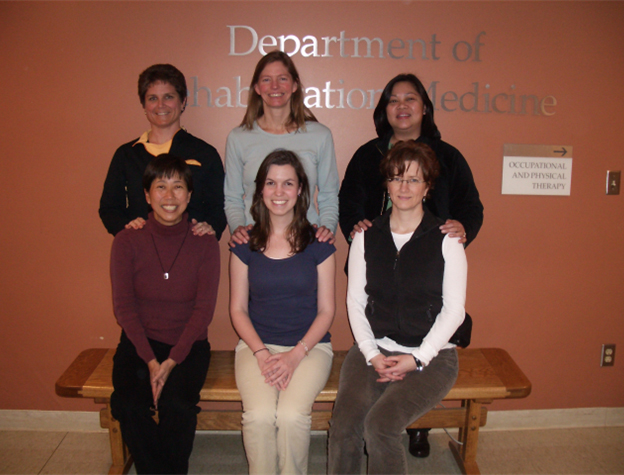
Established in 2006, the program was founded by Professors Jean Deitz, PhD, OTR, FAOTA, Kathryn Yorkston, PhD, BC-NCD, Deborah Kartin, PT, PhD, and Kurt Johnson, PhD. Recognizing that the most effective rehabilitation requires collaboration across multiple professions, the field of rehabilitation science encompasses basic and applied research from health sciences, social sciences, engineering, and related fields. An interdisciplinary program was central to the founders’ vision. Kartin, who served as the PhD program director from 2006 to 2019, was asked why an interdisciplinary rehabilitation science program was important.
“It can’t be done alone,” Kartin stated. “Rehab can’t be done alone. It takes multiple professions to move practice forward, to move education forward. We’re very interdependent.”
An origin story
In a conversation earlier this summer, Deitz, Kartin, and Yorkston, now professors emeriti, shared insights about the program origins and the vision that inspired it. They linked the program back to the original vision of founding Department Chair, Dr. Justus Lehmann, who recognized and advocated for interdisciplinary collaboration as a critical part of rehabilitation practice, research, and training.
The groundwork for a PhD program was being laid as early as the 1990s. At that time, Deitz and Kartin held leadership roles in advanced post-professional training programs for pediatric occupational therapists and physical therapists, supported by grants through the Department of Education and the Health Resources and Services Administration. These programs demonstrated clear impact, with graduates who went on to lead academic programs across the country. However, training in these programs primarily occurred in disciplinary silos. The program founders recognized the importance of interdisciplinary research training to advance rehabilitation science and clinical practice. Deitz noted that it was “our dream to have these programs intertwined.”
A shared vision… and a lot of hard work
The founders had a clear vision, but the work to establish this program was only beginning. The formal process of establishing the Rehabilitation Science PhD program began in 2001, five years prior to enrolling the first cohort. Deitz, who served as the Department’s Graduate Program Coordinator at the time, led the effort. Deitz noted that the support of former Department Chair Dr. Lawrence Robinson was critical to the program’s successful launch.
As Deitz recalled, “He was enthusiastic about this, and we had the building blocks by that time, so we were able to move fairly quickly.”
Even so, Deitz noted that “within the University system, there are so many steps to creating a doctoral program, and we were just a little committee doing our other jobs and continuing to build.”
The founders began the process by surveying the current state of the field. A 1997 Institute of Medicine report had noted that “Rehabilitation science… should serve as the basis for developing new opportunities in multidisciplinary research and education.” Despite this, only a handful of rehabilitation science doctoral programs existed in the early 2000s. In speaking to these programs, it seemed they often trained individuals from multiple professional backgrounds under the same administrative umbrella but lacked meaningful interactions among the disciplines. Yorkston noted that this observation strengthened their desire to create “a program that integrates the disciplines, so you can tackle these big issues outside your silos.”
Approval of the program required an extensive written report followed by a formal, in-person site visit with faculty evaluators from both the UW and peer institutions. Throughout this process, interdisciplinary training remained central to their vision. Reflecting on the founding faculty, Deitz noted, “We were so fortunate to have people in the Department who believed in this vision… who were passionate about this.”
The “special sauce”
By design, the Rehabilitation Science PhD program features several aspects that foster interprofessional communication and community. From the outset, the program has featured a core curriculum and seminar series that span seven academic quarters. These activities bring each cohort together for several hours per week.
“This was critical to developing their sense of community, sharing their perspectives from their own disciplines, and learning new insights from each other,” Kartin noted.
Current co-director Baylor reflected that the student cohorts consistently move beyond interdisciplinary training to develop a vibrant interdisciplinary community, calling this the “special sauce” of the program. Students help each other with their research, cheer each other on at defense presentations, gather for writing circles, and share advice and support along the way.
Celebrate with us
When the founders were asked what they were most proud of, Kartin did not hesitate.
“Our graduates. We’ve had tremendous graduates who have gone on to important positions.”
Yorkston agreed, “The product of our program is our graduates who have the mission in mind.”
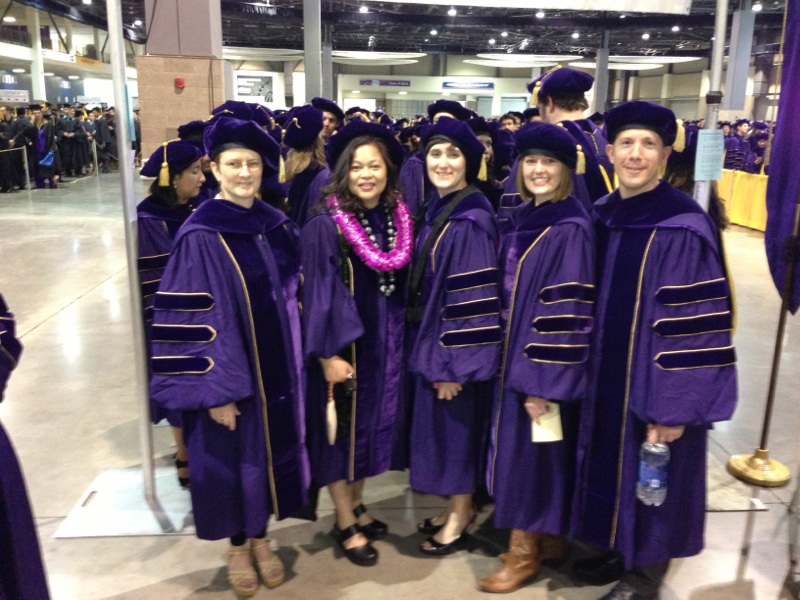
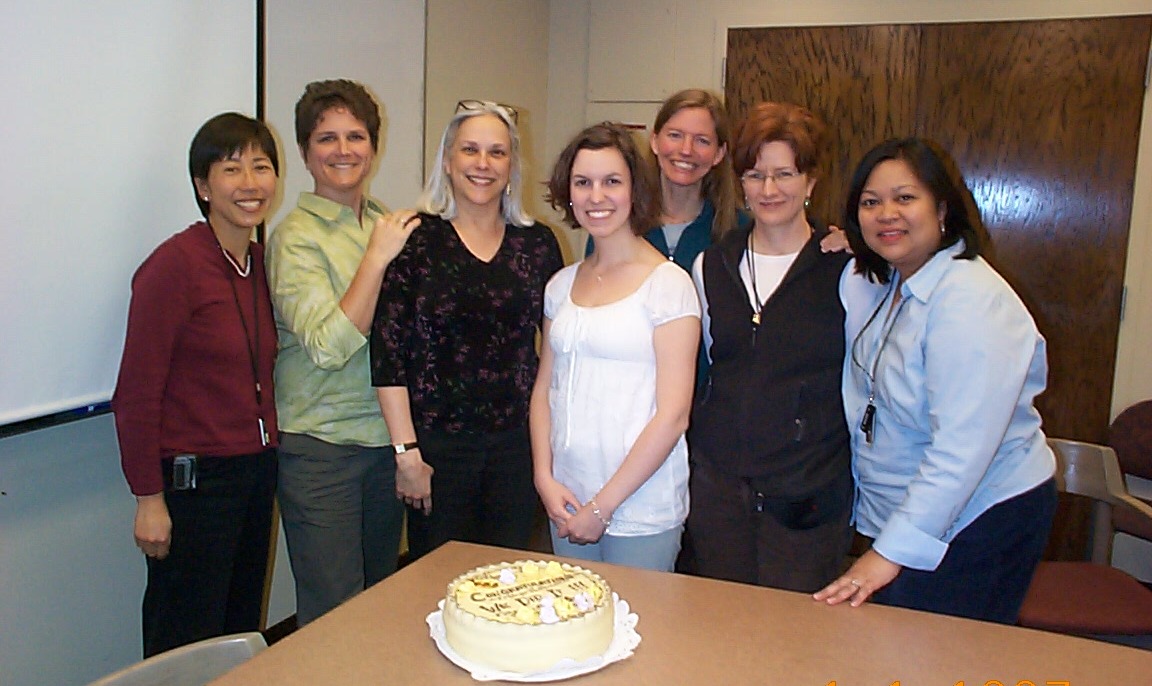
Over two decades, the program has produced 50 PhD graduates and counting. These graduates are positioned across the country in academic programs where they advance research and professional training, in clinical care positions with direct impact on patients and clients, and in federal roles that shape policy and funding decisions.
Over the coming year, we are excited to share stories that highlight the Rehabilitation Science PhD program leadership, mentors, students, and graduates. Our alumni will speak at several upcoming events. Our grand rounds will feature Dr. Andrew Sawers, PhD, in December 2026 and Dr. Anat Lubetzky, PT, PhD, CSCS, in June 2027. In addition, Dr. Anne Ordway, PhD, will deliver the commencement address at the School of Medicine PhD Hooding Ceremony in June 2027.
As ever, we are deeply grateful to the members of our Rehabilitation Science community who support our program and our students. If you are able to do so, we invite you to contribute to our PhD Student Education and Training Fund in honor of our 20th anniversary. Named in honor of Dr. Kartin, this fund provides essential support for research and educational expenses for PhD students in the Department of Rehabilitation Medicine. Help us support student success in the next 20 years of the program and beyond!