
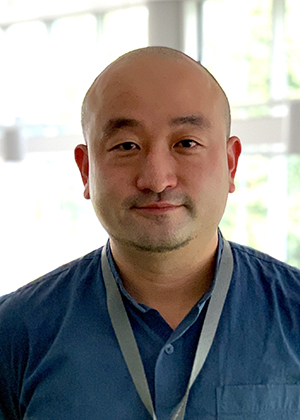
Assistant Professor Soshi Samejima, DPT, PhD, in the Division of Physical Therapy, has been named a scholar in the National Institutes of Health-funded Career Advancement and Development in Rehabilitation Research (CADRRE) K12 program. Funded through the National Center for Medical Rehabilitation Research, CADRRE supports early-career occupational and physical therapy faculty with mentored research, advanced training, and protected time to prepare for independent research careers. Led by the University of Florida and the University of Southern California, the program includes 16 partner institutions, including the University of Washington.
Dr. Samejima’s K12 project will investigate the underlying physiological mechanisms of how pairing cardiovascular-targeted transcutaneous spinal cord stimulation (tSCS) with arm-crank exercise improves cardiovascular and autonomic regulation in people with spinal cord injury (SCI). The stimulation is delivered non-invasively through electrodes placed on the skin and requires no surgery.
SCI can disrupt the sympathetic autonomic pathways that help regulate blood pressure and other cardiovascular functions. As a result, many people with SCI experience unstable blood pressure—such as sudden drops when sitting upright or dangerous spikes—as well as underlying cardiovascular disease risks. Focusing on the mechanistic foundations of recovery, the study will examine how combining tSCS with upper-body exercise modulates sympathetic nervous system activity and drives autonomic neuroplasticity to restore steadier blood pressure and cardiorespiratory function.
The K12 award provides $300,000 over three years to support Dr. Samejima’s protected research time and advanced scholarly training. The award will also provide mentorship as Dr. Samejima expands the ARC (Autonomic Rehabilitation and Collaborative) Lab at the University of Washington. The program pairs scholars with senior rehabilitation and neuroscience researchers who provide scientific guidance and support their development as independent investigators.
“Much of spinal cord stimulation research has focused on movement, while ‘invisible’ autonomic issues, like blood pressure instability, remain top priorities for people with SCI,” Dr. Samejima said.
The project supports Dr. Samejima’s goal of developing accessible, nonsurgical neuromodulation approaches to address multi-system autonomic health after SCI. Findings from the study may help inform future, larger clinical trials.