
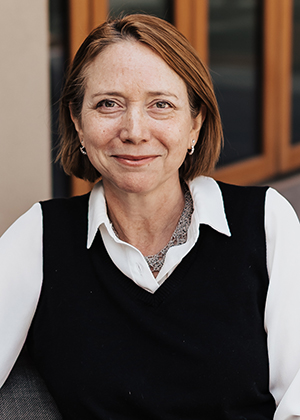
Janna Friedly, MD, MPH, has been named the inaugural holder of the Endowed Chair in Rehabilitation Medicine in Honor of Stanley A. Herring, following approval by the UW Board of Regents. She is professor and chair of the Department of Rehabilitation Medicine in the UW School of Medicine.
“Dr. Friedly is an outstanding leader, clinician-scientist and educator whose work reflects the spirit and vision of this endowed chair,” says Tim Dellit, MD, CEO of UW Medicine and the Paul G. Ramsey Endowed Dean of the UW School of Medicine. “Her commitment to advancing rehabilitation medicine, improving quality of life for patients and expanding access to outstanding care makes her an exceptional inaugural holder of a chair established in honor of Dr. Stanley Herring’s extraordinary legacy.”
The Endowed Chair in Rehabilitation Medicine in Honor of Stanley A. Herring was established to recognize Herring’s profound impact on rehabilitation medicine, sports medicine and patient care over decades of leadership, mentorship and innovation. A longtime UW faculty member, Herring is internationally recognized for his contributions to nonoperative spine care, sports concussion management, and advocacy for the health and safety of athletes and active people.
To learn more about Dr. Herring and his impact on sports medicine and rehabilitation medicine, read From private practice to academic innovation: Sports & Spine at UW Medicine.
Friedly has served as chair of the Department of Rehabilitation Medicine since 2024. Her research focuses on improving treatment for musculoskeletal conditions, particularly back pain, and advancing evidence-based rehabilitation care. She has led numerous federally funded studies and national collaborations aimed at improving outcomes and quality of life for patients with disabling conditions.
The endowed chair will support continued innovation in rehabilitation medicine, helping advance research, education and patient care for future generations.
We spoke with Dr. Friedly about her career, her research and what this endowed chair means to her.
You have been with UW Medicine since your residency. What has kept you here for more than two decades?
I have been at UW for 26 years, starting with my residency training. In that time I have gone from trainee to faculty and have worked in research, teaching, clinical care and administration. I have held many roles over the years, but my passion has always been serving the Department of Rehabilitation Medicine and advancing our work for patients with disabling conditions.
What does becoming the inaugural holder of this endowed chair mean to you?
It is an absolute honor, and I am humbled by Stan Herring’s legacy. No one has worked harder to advance physiatry and improve the lives of athletes and people with disabilities. One example is his role in passing the Lystedt Law, which became the model for youth concussion laws in all 50 states. It has protected millions of young athletes from serious brain injury.
You have known and worked with Dr. Herring for many years. What have you learned from him?
I have learned a thousand “Stanisms.” Nobody delivers a sharp, insightful and funny one-liner the way he does. He has taught me about service to patients, to colleagues and to the field. He has also taught me why it matters to pick up the phone and connect with people personally. Taking the extra time to connect with someone personally goes a long way toward achieving shared goals.
What priorities do you hope to advance through this endowed chair?
I plan to focus on expanding our support for adaptive sports. No other activity brings our whole department together the way adaptive sports does: trainees, staff, physicians, psychologists, PT, OT and prosthetics and orthotics. Our shared purpose is helping people in our community fully participate and thrive. Leading the way in caring for para-athletes and helping athletes of all abilities compete at every level, is central to what we do. It is also a fitting way to honor Stan’s legacy.
What do you hope this chair’s impact will be in the years ahead?
This chair will let me invest in the people and projects that move our field forward. Philanthropic support is critical to our work, and this chair gives me the flexibility to advance the department strategically.
How does this support your long-term vision for rehabilitation medicine at UW Medicine?
Our vision is that all people can fully participate and thrive. To get there, I am working toward building a Rehabilitation Institute and investing in key strategic programs such as adaptive sports.
Is there anything else you’d like to add?
Because of this endowed chair, Stan’s impact will last for generations.