
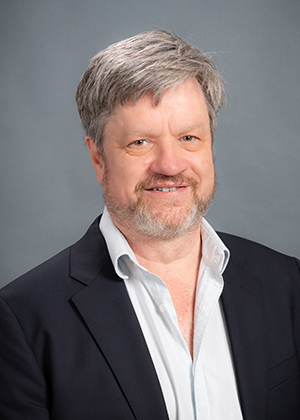
Associate Professor Donald Fogelberg, PhD, OTR/L, in the Department of Rehabilitation Medicine’s Occupational Therapy division, will contribute to two projects supported by Innovation Grants from the Garvey Institute for Brain Health Solutions. Together, the projects bring occupational therapy perspectives on meaningful activities, daily life, and participation in the community to interdisciplinary mental health research.
The Garvey Institute for Brain Health Solutions awarded 12 Innovation Grants this year to support projects focused on behavioral health, mental health, substance use, and other brain health concerns. The grants support research and other efforts to address gaps in care, improve training, and develop new approaches to supporting individuals, families, and communities. Read the Garvey Institute’s announcement about the 12 new Innovation Grants.
Fogelberg and Susan Lin, PhD, MHA, of the Department of Psychiatry and Behavioral Sciences at the UW School of Medicine, will co-lead “Building therapeutic community in adult family homes for people living with severe mental illness: A participant-informed study.” The project will explore how elements of therapeutic communities could be adapted to support connection, autonomy, and participation in daily life in adult family homes. Current and former residents, along with staff members, will help shape the research. The team will also conduct a series of focus groups with people connected to adult family homes in Washington state.
Fogelberg will also serve as a co-investigator on “From discharge plans to recovery plans,” led by Yang Jae Lee, MD, of the Department of Psychiatry and Behavioral Sciences at the UW School of Medicine. The project will develop and test personalized recovery plans to help people leaving psychiatric hospitals turn their priorities into achievable steps for rebuilding routines, relationships, and meaningful activities. Both projects create opportunities to apply occupational therapy’s focus on participation to support recovery, daily routines, relationships, and meaningful activities.