
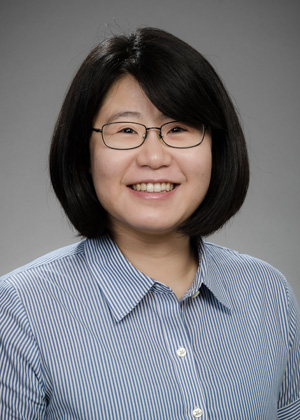
Cherry Junn, MD, associate professor in the Department of Rehabilitation Medicine at the UW School of Medicine, has been appointed as the first holder of the newly created Richard H. Adler, JD, and the Adler Giersch Law Firm Endowed Professorship in Traumatic Brain Injury.
A board-certified specialist in Brain Injury Medicine, Dr. Junn serves as program director of the Brain Injury Medicine Fellowship and medical director of Rehabilitation Medicine Consults at Harborview Medical Center. Her clinical work spans acute care, inpatient rehabilitation, and outpatient follow-up, allowing her to support patients and families across the continuum of care.
The professorship recognizes Dr. Junn's contributions to brain injury care, education, mentorship, and research. Since 2019, she has led the Brain Injury Medicine Fellowship, helping train future specialists while advancing research and clinical care for people affected by brain injury.
Established through the generosity of Richard and Donna Adler, and the Adler Giersch Law Firm, the professorship supports education, research, and innovation in traumatic brain injury care.
We spoke with Dr. Junn about her career, mentorship, research, and goals for the future.
What drew you to brain injury medicine?
Brain njury can affect each person so differently. I was drawn to Brain Injury Medicine because it allows me to help people and their families through a time of great uncertainty. A brain injury can change so many aspects of a person’s life: physical function, cognition, emotions, relationships, work, and community partipation. I value helping people understand what they are experiencing, identify what maters most to them, and adjust the plan as their recovery evolves.
Why did you choose to practice at UW Medicine?
During my fellowship at UW, I was struck by the dedication to teaching and the effort that went into each individual learner and grew so much as a physician. I chose to practice here because I wanted to continue fostering that kind of learning environment.
Harborview Medical Center also offers the opportunity to care for patients across the continuum, from acute hospitalization to inpatient rehabilitation and outpatient follow-up, while working alongside an exceptional and dedicated interdisciplinary team.
What does this professorship mean to you personally and professionally?
This professorship is a tremendous honor. Personally, it is especially meaningful because Richard [Adler] supported me early in my journey at UW and in Brain Injury Medicine, beginning when I was a fellow. His mentorship, encouragement, and willingness to connect me with others across UW and the brain injury community have had a lasting impact on my career. His continued interest in our fellowship program also has been incredibly helpful.
Professionally, this recognition affirms the importance of education, mentorship, and compassionate care for people who have sustained brain injuries. Richard and Donna Adler and the Adler Giersch Law Firm have shown longstanding support for our patients and families in many meaningful ways, including support for traumatic brain injury research grants and the 4 West Hospital Wish List. The gifts from the Wish List mean so much to our patients and to the care team as patients move through recovery. I am deeply grateful for their partnership and hope to carry this honor forward by strengthening training, collaboration, and care for people affected by brain injury.
The professorship recognizes your work in education, mentorship, and brain injury care. Which aspect of your work has been the most meaningful to you and why?
Mentoring fellows has been especially meaningful. It is a privilege to get to know each fellow, help them develop their clinical skills and confidence, and support their growth into independent physicians and leaders. I have been fortunate to see former fellows move into careers as educators, clinical leaders, and advocates for people with brain injury.
I also truly enjoy continuing to work alongside many of them in the field of Brain Injury Medicine after graduation. Seeing former fellows become colleagues, and continuing to learn from one another, has been one of the most rewarding parts of this work.
What have you learned from mentoring fellows that has influenced your own approach to clinical care or leadership?
Mentoring has reinforced the importance of listening first. Each fellow brings different experiences, strengths, goals, and ways of learning, so effective mentorship requires an individualized approach. The same is true in clinical care - patients and families benefit when we take time to understand their priorities, concerns, and circumstances.
I have learned a great deal from my fellows. They have taught me how to approach conflict more gracefully, to appreciate quiet resilience, and to bring energy and openness to a team. Mentoring has also changed how I teach. I have had to learn when to step back, how to support someone's growth from a distance, and how to provide structure when a learner feels overwhelmed by competing demands.
They have also deepened my understanding of the responsibility that comes with teaching and leadership, including the importance of making difficult decisions thoughtfully and transparently. They have encouraged me to think more broadly about systems of care and to remain continuously curious about how we can make care both more efficient and more kind. Each fellow has helped me grow as a person, physician, teacher, and leader.
How does training fellows, residents, and other healthcare professionals ultimately benefit patients and families affected by brain injury?
Brain injury affects all aspects of a person's life, and every person may present very differently after injury. This can make caring for patients with brain injury confusing and challenging for clinicians who have not had specialized training. Symptoms may affect thinking, behavior, mood, physical function, relationships, work, and participation in the community, sometimes in ways that are not immediately visible.
By training fellows, residents, therapy trainees, and community providers, we build a broader network of professionals who understand these complexities. My hope is that patients and families will encounter clinicians who recognize their concerns and understand how to treat them,
As director of the Brain Injury Medicine Fellowship, what lessons do you want trainees to carry with them throughout their careers?
I hope trainees carry forward clinical curiosity, humility, and respect for the lived experiences of patients and families. Brain injury does not have a single, predictable course, so it is important to listen carefully, recognize each patient's individual strengths and challenges, and continue learning throughout one's career.
I also hope fellows value collaboration. Excellent brain injury care requires partnership among patients, families, therapists, social workers, care managers, medical and surgical teams, mental health providers, and community organizations. Finally, I hope they become educators themselves and share what they learn with the next generation of clinicians.
Can you tell us about current projects that you are particularly excited about?
I am excited to support a project led by Dr. Allison Wallingford, one of our current faculty members and a graduate of our Brain Injury Medicine Fellowship, along with Dr. Amy Starosta. The project examines equity in traumatic brain injury care, including whether intersectional factors may influence admission to inpatient rehabilitation and how often biased language is used in electronic medical records for people with traumatic brain injury.
This work matters because both access to rehabilitation and the language used in medical records can shape a patient's care experience and opportunities following injury. By identifying where inequities may occur, we can work toward a more respectful, equitable, and patient-centered system of care.
I am also excited about our work through the Traumatic Brain Injury Model System. One important question is how people's needs change over time after traumatic brain injury. Recovery is not limited to the initial hospitalization or rehabilitation stay. Many individuals continue to experience changes years after injury.
The Traumatic Brain Injury Model System helps us better understand these long-term experiences and identify ways to improve ongoing care. This work is important because it helps shift the focus from treating brain injury as a single event to recognizing it as a condition that may require long-term, individualized support.
How will this professorship help advance your goals for brain injury education, research, and patient care over the next several years?
I hope to continue developing individualized training for fellows, expanding educational outreach to residents and other healthcare professionals, and creating opportunities for community clinicians to learn from specialists, patients, and families.
The funding will also allow us to purchase equipment that directly improve fellowship training, including a dedicated ultrasound for the fellowship. Having it available for regular teaching will strengthen hands-on learning by providing more opportunities to practice procedures and build confience before using those skills in patient care.
I also hope to deepen collaborations across UW Medicine and with community partners to improve care for people with brain injury, including those with disorders of consciousness, behavioral challenges, and long-term needs after injury. The support represented by this professorship will help sustain a community of learning, mentorship, and innovation centered on better care for patients and families.
Is there anything else you would like to share?
I would like to recognize the patients and families who share their experiences with us. They are our most important teachers. Their insights remind us that brain injury care must be grounded not only in medical knowledge, but also in listening, respect, and partnership.
I am deeply grateful to Richard and Donna Adler and the Adler Giersch Law Firm for their support of our patients, families, trainees, and brain injury community. This professorship is an honor and a responsibility that I will carry forward with gratitude.