
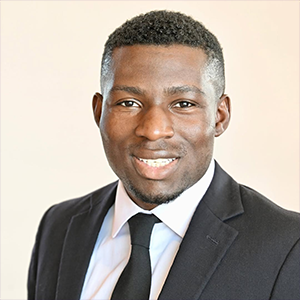
Adedeji Adeniyi, MD, a Physical Medicine & Rehabilitation (PM&R) resident at the University of Washington School of Medicine, received the 2026 Dr. Martin Luther King Jr. Community Service Award.
“I’m really grateful for this award. It also reflects a lot of people who supported me along the way: mentors, patients, and communities,” says Dr. Adeniyi.
Dr. Adeniyi was inspired to pursue a career in medicine by his father, who served in the U.S. military for more than a decade. His father was injured during his service and subsequently discharged.
As a high school student, Dr. Adeniyi volunteered at the Fayetteville VA Medical Center in North Carolina while his father was receiving treatment. This sparked a lifelong desire to help others in a similar situation. Witnessing the profound impact of his father's transition injury and healing and the effect it had on their family left a lasting impression on Dr. Adeniyi.
“I saw medicine as more than tests and treatments. It was about helping people regain stability and purpose. Seeing rehabilitation teams work together to support patients made medicine feel personal and meaningful, and that’s when I knew Physical Medicine & Rehabilitation was what I wanted to pursue,” says Dr. Adeniyi.
Guided by the principles of Dr. Martin Luther King Jr., Dr. Adeniyi is a dedicated advocate for expanding opportunity within the medical field. For Dr. Adeniyi, Dr. King’s legacy reminds him that equity in healthcare isn’t separate from justice. It’s part of the same work.
“Dr. King’s work was about dignity, justice, and service. Those values matter a lot to me, both personally and professionally. Rehabilitation medicine often serves people who are overlooked or underestimated, including those living with disability or chronic illness,” he adds.
“Dr. King’s work was about dignity, justice, and service. Those values matter a lot to me, both personally and professionally. Rehabilitation medicine often serves people who are overlooked or underestimated, including those living with disability or chronic illness,” he adds.
For Dr. Adeniyi, medicine is built on relationships. When patients feel understood and respected, they are more likely to engage in rehabilitation.
“Having a diverse workforce brings different perspectives on pain, family, culture, and recovery, and that directly affects outcomes. Increasing diversity strengthens the field and improves care for the patients we serve,” says Dr. Adeniyi.
Going forward, Dr. Adeniyi wants to show that service works best when people show up consistently and stay humble.
“It’s about listening, building trust, and creating programs that last beyond any one person. I want to keep combining clinical care with mentorship, education, and research. PM&R makes that possible because it focuses on both individual patients and the systems that affect their lives,” adds Dr. Adeniyi.